Mark Alexander (b. Horsham, 1966) is a British painter. His work returns repeatedly to the question of what survives when structures of meaning begin to fracture. Religious imagery, national symbols, technological systems and personal histories appear in his paintings not as fixed signs, but as forms under pressure: altered, eroded, reflected back, or made physically unstable. The work reflects an ongoing concern with how technological acceleration alters perception, memory and belief.
2026
Winner of the Bryan Robertson Prize
2025
The Villa Wasmuth Paintings. Intérieur No 253. Remagen. Germany.
2021
Love Between The Atoms: SAUVAGE, Düsseldorf, Germany
2020
Anthony Wilkinson Gallery, London
2016
Wrestling with Angels, exhibited with permanent collection, Gemäldegalerie, Berlin
2015
Credo, Beethoven-Haus, Bonn, Germany
2014–2015
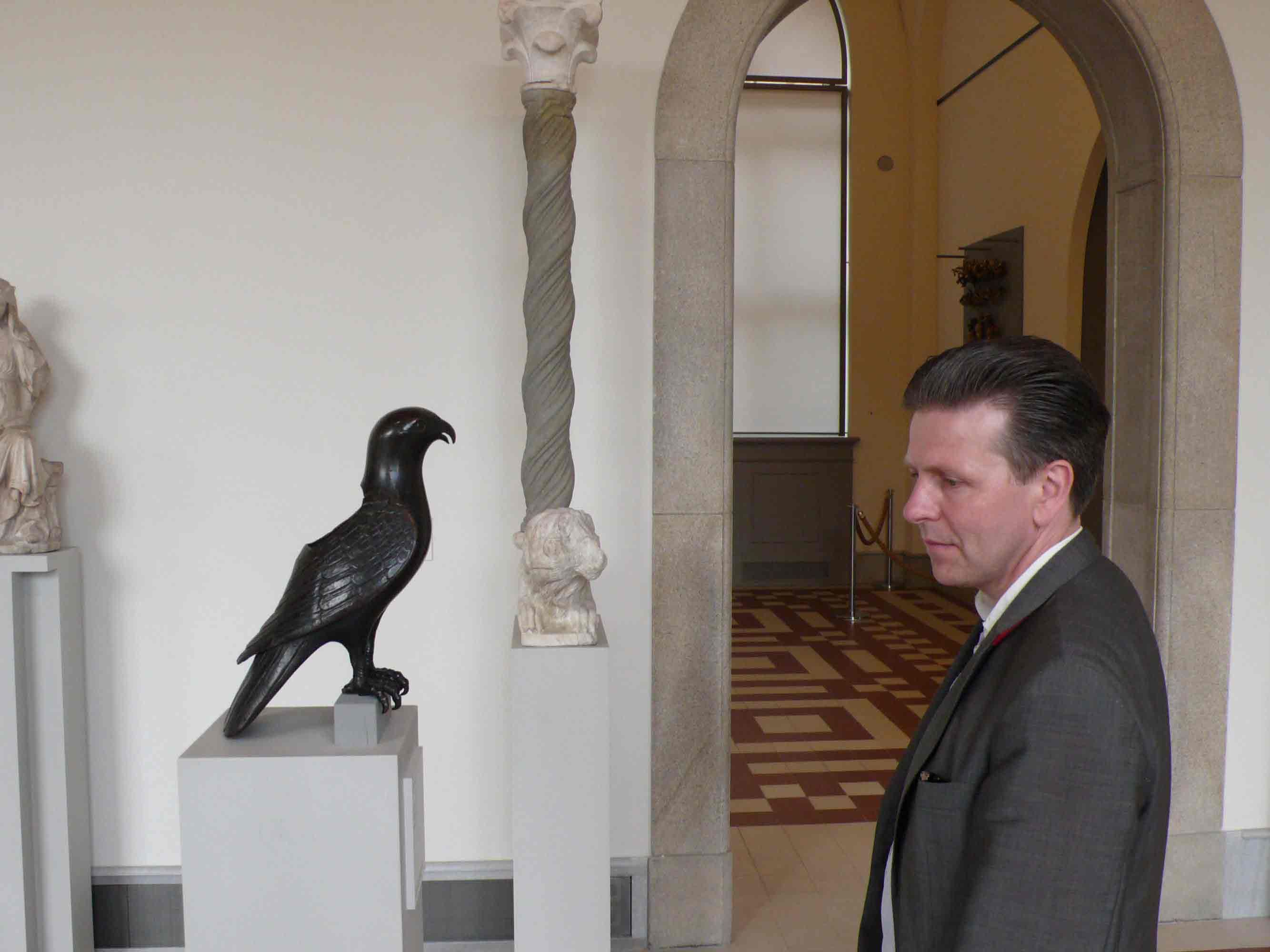
Mark Alexander Red and White Mannheim, Bode Museum, Berlin, Germany curated by Dr. Julien Schapuis.
2014
Mannheim Paintings, Galerie Bastian, Berlin
2013
American Bog, Broadway 1602, New York
2012
Ground and Unground, Wilkinson Gallery, London
2011
Red Mannheim: Special Display, St. Paul’s Cathedral, London
2010
2009
A Blacker Gold, Haunch of Venison, Berlin
2005
The Bigger Victory, Haunch of Venison, London
2001
The Abhorrence of Virtue and the Love of Vice, Anthony Reynolds Gallery, London
1999
Ozymandias, Anthony Reynolds Gallery, London